India rejects sanctioned Russian liquefied natural gas despite looming energy shortages, exposing how U.S. sanctions force global buyers to choose between affordable fuel and Washington’s geopolitical demands.
Story Snapshot
- India’s Petroleum Minister Hardeep Singh Puri rejected Russia’s sanctioned LNG offer during April 30, 2026 talks with Deputy Energy Minister Pavel Sorokin.[1][2][3]
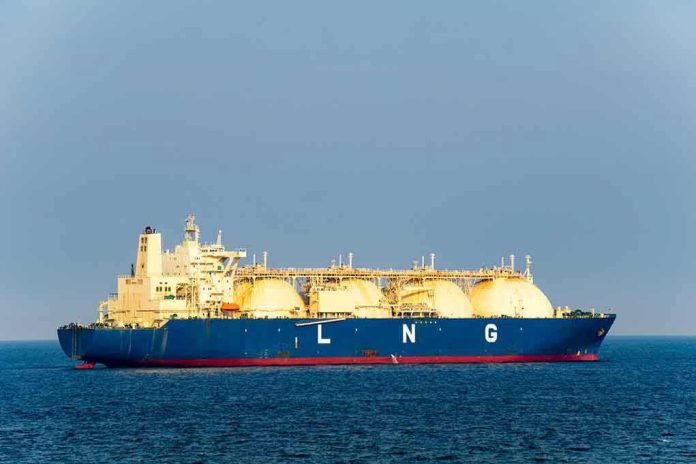
- A 138,200-cubic-meter tanker, Kunpeng, carrying LNG from U.S.-sanctioned Russia’s Portovaya plant, idles near Singapore after initial India destination.[1]
- India faces regional LNG shortfalls from Middle East tensions but prioritizes sanctioned-free imports, mainly for Europe reroutes.[1][3]
- Russia persists with offers, scheduling Sorokin return in June 2026 for authorized LNG discussions.[1][2]
- This standoff underscores sanctioned LNG’s rerouting challenges, previously limited to China’s Beihai port.
India’s Official Rejection of Sanctioned LNG
India’s Petroleum and Natural Gas Minister Hardeep Singh Puri informed Russia’s Deputy Energy Minister Pavel Sorokin on April 30, 2026, that India would not buy liquefied natural gas from U.S.-sanctioned projects. Two sources with direct knowledge confirmed this stance during Sorokin’s visit to discuss energy supplies.[2][3][4] India holds a U.S. waiver for Russian crude oil purchases but applies stricter caution to LNG, avoiding any violation risks amid tightening enforcement.[1]
The decision prioritizes compliance despite regional energy pressures. Middle East conflicts exacerbate LNG shortfalls, yet India seeks supplies without sanctioned origins. Documents on the stranded cargo claimed non-Russian sourcing, but shipping data linked it to Portovaya in the Baltic Sea.[1]
Stranded Tanker Highlights Sanctions Impact
The tanker Kunpeng, with 138,200 cubic meters of LNG from Portovaya, diverted after India refused delivery. Initially bound for Dahej terminal in western India, it now lingers near Singapore without a confirmed port.[1] This marks a potential first sanctioned LNG attempt to India, contrasting prior deliveries solely to China’s Beihai from Portovaya and Arctic LNG 2.
Russia promotes these cargoes as unsanctioned, rerouting exports disrupted since January 2025 Ukraine-related penalties. India’s refusal strands the shipment, illustrating LNG’s traceability compared to crude oil’s evasion tactics like ship-to-ship transfers.[1] Global buyers navigate similar binds, balancing cost savings against secondary sanction threats.
Energy Security vs. Geopolitical Pressures
India explores authorized Russian LNG volumes, often Europe-bound, while rejecting sanctioned ones. Sorokin’s June 2026 return signals ongoing talks for compliant deals.[1][2] This selective approach maintains energy inflows—Russia supplies discounted oil under waivers—without full sanction exposure.
India's rejection of Russian LNG amid sanctions spotlight Moscow's supply pivot struggles. While India still buys Russian crude, the complexity of sanctioned LNG is harder to navigate. This is a crucial test for Russia's export adaptability. pic.twitter.com/8h4EUG7UDG
— Defined Edge (@DefinedEdge) May 12, 2026
Americans across the spectrum watch as U.S. sanctions ripple worldwide, hiking energy costs at home through higher global prices and supply volatility. Conservatives decry renewable policies amplifying fossil fuel dependence; liberals lament welfare strains from inflation tied to these disruptions. Both see elites wielding sanctions as tools for control, sidelining citizens’ affordable energy needs and the self-reliant principles founding the nation.[1][3]
Sources:
[1] Web – India Navigates a Tenuous Energy Balance amid Sanctions
[2] Web – Sources: India Refuses Russian LNG Due To Sanctions;
[3] Web – India has refused to buy Russian LNG due to sanctions — Reuters
[4] Web – India Rejects Sanctioned Russian LNG, Stranding Tanker as Energy …