Qatar’s finance minister is sounding a five-alarm warning that the Iran war’s economic shockwave hasn’t even fully arrived yet — and when it does, Americans could face an energy availability crisis unlike anything seen in decades.
Story Snapshot
- Qatar’s Finance Minister Ali Ahmed Al-Kuwari told an International Monetary Fund (IMF) forum that a “full-fledged” global economic impact from the Iran war is “not far away,” warning it could arrive within one to two months.
- The minister said the recent spike in global energy prices is just the “tip of the iceberg,” and that the crisis will soon shift from high prices to physical energy unavailability.
- Qatar’s energy minister separately warned the war could “bring down the economies of the world” and push oil to $150 per barrel if Gulf energy exporters halt production.
- Fertilizer shortages tied to the conflict could disrupt planting seasons and trigger a global food crisis on top of the energy shock.
A Warning From the Heart of the World’s Energy Supply
Qatar Finance Minister Ali Ahmed Al-Kuwari delivered a stark warning at an International Monetary Fund (IMF) discussion in Washington in April 2026, telling attendees that the world has not yet felt the full force of the Iran war’s economic consequences. “A full-fledged impact is coming, and it is not far away,” Al-Kuwari said, predicting that within “one month, two months’ time you are going to see really a huge economic impact globally.” The statement came as global energy markets were already reacting to regional instability.
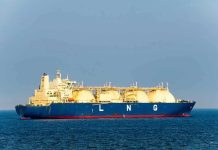
Al-Kuwari’s most alarming assertion was not about price levels but about physical supply. “Very soon, you are going to have a problem of energy availability, not just prices,” he said, describing the current market turbulence as merely the “tip of the iceberg.” The Strait of Hormuz — the narrow waterway through which roughly one-fifth of the world’s petroleum liquids pass — remains central to the concern. Any sustained disruption there would not be an abstract market event; it would mean fuel shortages hitting American families, truckers, and manufacturers directly.
Food and Fertilizer: The Hidden Second Shockwave
Beyond fuel, Al-Kuwari pointed to a cascading threat that most headlines have overlooked: fertilizer. Prolonged trade disruption tied to the Iran conflict threatens shortages in natural gas, fertilizer, and helium, according to reporting on his remarks. Reduced fertilizer production and supply could cause farmers to miss planting seasons, potentially triggering a food crisis on top of the energy shock. For American families already battered by years of inflation driven by reckless government spending, a simultaneous spike in food and energy costs would be devastating.
Qatar’s energy minister, Saad al-Kaabi, reinforced the warning from a different angle, stating the war could “bring down the economies of the world” and that oil could surge to $150 per barrel if Gulf energy exporters shut down production. These are not fringe voices — they are senior officials from one of the world’s largest liquefied natural gas exporters, speaking from direct exposure to the conflict’s economic fallout. Their warnings deserve serious attention, not dismissal.
Qatar’s Own Fiscal Cushion — and What It Means for Everyone Else
Al-Kuwari acknowledged that Qatar itself has significant buffers to weather the storm, noting the country could go six months without tapping its sovereign wealth fund, tighten its budget, borrow if needed, and delay investment projects. He said Qatar could manage for “a full year” if necessary. That fiscal resilience is reassuring for Doha, but it also underscores the severity of the threat — a country with enormous energy wealth is actively stress-testing its finances against this scenario.
Minister of Finance Meets Partner and Chairman of KKR Global Institute#QNA #Qatarhttps://t.co/qcv5qvaRKQ pic.twitter.com/gK1Xnfj1Zt
— Qatar News Agency (@QNAEnglish) May 11, 2026
The United States, under the Trump administration’s energy-dominance strategy, has worked to expand domestic oil and gas production precisely to reduce American vulnerability to Middle East supply shocks. That policy now looks prescient. If the Iran war continues to destabilize Gulf energy flows, nations dependent on foreign energy will feel the pain far more acutely than those that invested in energy independence. The warning from Qatar is a reminder of why keeping American energy production strong is not just an economic choice — it is a national security imperative. Americans should watch the Strait of Hormuz closely in the weeks ahead.
Sources:
[1] Web – Qatar warns wider economic fallout from Iran war still ahead if …
[2] Web – Qatar warns ‘full-fledged’ Iran war impact about to hit global economy
[3] YouTube – Iran war could “bring down the economies of the world …
[4] Web – Iran war’s full economic impact nearing, Qatar finance minister says
[5] YouTube – Qatari spokesman warns of “catastrophic results” for region as Iran …
[6] Web – Economic impact of the 2026 Iran war – Wikipedia