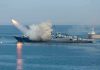
When a single 21-mile shipping chokepoint becomes a bargaining chip in nuclear diplomacy, American families can feel it at the pump within days.
Quick Take
- Oil prices jumped after U.S.-Iran peace talks stalled and the U.S. began a blockade targeting Iranian oil exports through the Strait of Hormuz.
- Brent crude rose about 7% to roughly $97 a barrel, while WTI climbed about 6% to roughly $88, signaling immediate inflation pressure tied to energy.
- The talks reportedly broke down over U.S. demands for a long-term halt to Iranian uranium enrichment and guarantees of free transit through Hormuz.
- Pakistan has been floated as a possible host for renewed talks as early as this week, though the situation remains fluid.
Oil markets react fast when diplomacy breaks down
Energy traders repriced risk almost immediately after reports that U.S.-Iran talks collapsed and the U.S. began a blockade aimed at Iranian oil exports moving through the Strait of Hormuz. Brent crude rose about 7% to around $97 per barrel, and U.S. benchmark WTI climbed about 6% to around $88. Those are not abstract numbers: higher crude prices typically filter into gasoline, shipping, and consumer costs quickly.
The Strait of Hormuz is a narrow maritime artery with outsized economic impact, handling roughly one-fifth of global oil flows. Even limited disruption—or credible threats of disruption—can trigger price spikes because refiners and shippers must plan weeks ahead. Reports also suggested mixed conditions on the water, with some ships still transiting despite tanker standstills tied to the blockade, underscoring how partial enforcement can still rattle markets.
Two red lines collide: uranium enrichment and free transit
The core dispute described in the reporting centers on two demands the U.S. is pressing simultaneously: preventing Iran from acquiring a nuclear weapon by requiring a long halt in uranium enrichment, and restoring guaranteed free transit through Hormuz. Iran reportedly offered a shorter enrichment pause—measured in a few years—while resisting concessions that touch its control of the strait since the war began. That combination turns negotiations into a high-stakes trade: nuclear limits for maritime access.
President Trump’s position, as characterized in the coverage, frames the nuclear issue as the non-negotiable foundation—“Iran can never have a nuclear weapon”—with other requirements flowing from that. From a conservative limited-government perspective, the key domestic question is not rhetorical but practical: whether Washington can impose costs abroad without quietly importing those costs through higher inflation at home. Energy is still the economy’s bloodstream, and disruptions punish working households first.
Blockade pressure meets political pressure in Washington
Democrats in Congress are pushing a War Powers-style effort aimed at curbing presidential military actions amid rising economic and security risks. That internal fight matters because it can shape U.S. leverage abroad. Adversaries watch whether the U.S. government speaks with one voice, and markets do too. When Washington looks divided, traders often price in a longer, messier standoff—meaning consumers face a greater chance of sustained energy-driven price increases.
Republicans controlling both chambers gives the administration more room to sustain its strategy, but it does not eliminate the broader public skepticism that has grown across the spectrum. Many Americans—right, left, and independent—see institutions that react quickly when elite priorities are threatened but move slowly when families face affordability crises. In that climate, any policy that risks a fresh inflation burst will be judged not just on national security goals, but on whether leaders level with the public about tradeoffs.
What to watch next: talks, transit, and the inflation channel
Two sources cited in the reporting suggested negotiations could restart as early as this week, with Pakistan mentioned as a potential host. If talks resume, markets may cool somewhat, but the biggest driver will be clarity on shipping access and enforcement—whether tankers truly remain sidelined and whether free transit can be credibly guaranteed. If the blockade persists without a diplomatic off-ramp, the risk is a longer energy shock that spreads through transportation and household budgets.
Oil prices climb as US-Iran peace talks stall https://t.co/7p6hmXMGNA
— Jazz Drummer (@jazzdrummer420) April 19, 2026
For Americans trying to make sense of the moment, the takeaway is straightforward: geopolitical hardball often shows up domestically as higher prices, not as a line item in a foreign-policy briefing. The administration’s challenge is to pursue nonproliferation and secure sea lanes while minimizing blowback to consumers—especially seniors and middle-income families living on fixed or tight budgets. With limited public detail on next steps, the situation warrants close monitoring rather than guesswork.
Sources:
Oil markets jump as US-Iran Hormuz