A new immigration policy freezes visa processing from 75 countries, stirring debate on national security and constitutional rights.
Story Overview
- The Trump administration halts visa processing for 75 nations, citing national security.
- This policy affects both immigrant and nonimmigrant visas, expanding the previous travel ban.
- Somalia, described as a “terrorist safe haven,” is a key focus, sparking protests in Minneapolis.
- The policy has been met with legal challenges and criticism from advocacy groups.
Trump Administration Expands Immigration Restrictions
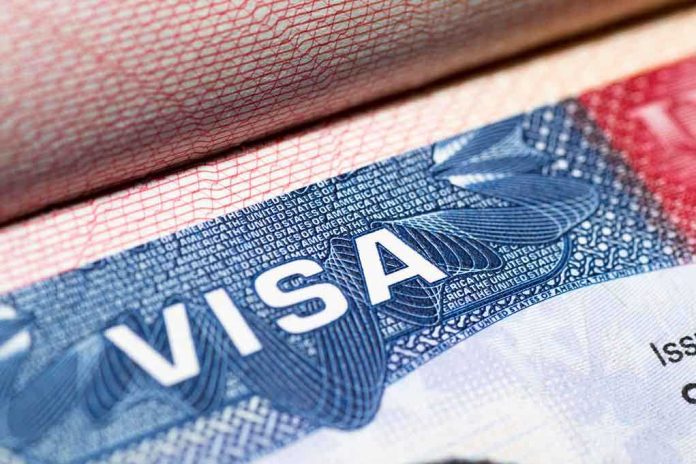
On January 14, 2026, the Trump administration announced a sweeping freeze on visa processing from 75 countries, including Somalia, Russia, and Iran. This move is seen as an expansion of Trump’s immigration agenda, which previously included a travel ban on several Muslim-majority countries. Homeland Security Secretary Kristi Noem justified the freeze by labeling some nations as security risks or dysfunctional states. The freeze went into effect on January 21, 2026, pending a State Department reassessment of visa procedures.
Critics argue that this policy undermines American values of hospitality and fairness, especially targeting Somali communities. Trump’s administration has frequently criticized Somali immigrants, with derogatory remarks and threats of denaturalization for those involved in fraud. This has sparked protests in cities with significant Somali populations, like Minneapolis. Legal experts predict that the policy will face multiple challenges in courts, potentially halting its implementation.
Impact on Somali Communities and Beyond
Somalia has been under Temporary Protected Status (TPS) since 1991 due to ongoing conflict and insecurity. The recent freeze affects approximately 705 to 2,400 Somali TPS holders, who must leave the U.S. by March 17, 2026, unless a court intervenes. This policy not only impacts Somali nationals but also disrupts visa processing for applicants from major economies, including Brazil and Russia, causing global diplomatic tensions.
Advocacy groups have criticized the administration’s assertion that conditions in Somalia have improved. Reports indicate worsening security, with increased violence from Al-Shabaab insurgency. Despite these conditions, the administration maintains that retaining TPS holders contradicts national interests. The policy has broad implications, affecting labor markets and international relations, and signals a shift in U.S. immigration policy away from humanitarian protections.
Legal and Social Repercussions
The visa freeze extends Trump’s previous travel restrictions, adding 20 new countries to the list. This expansion prompts a reevaluation of U.S. immigration policies and raises questions about their alignment with constitutional rights. The policy’s impact on communities is extensive, with potential family separations and disruptions to businesses relying on immigrant labor. Legal battles are anticipated, with courts possibly delaying or blocking the policy’s full enactment.
President Trump’s rhetoric and policy decisions continue to polarize public opinion, igniting debates on national security versus humanitarian obligations. As advocacy groups prepare for legal challenges, the administration stands firm on its stance, asserting that these measures are necessary to protect the nation.
Sources:
ABC7: Trump is Ending Protected Immigration Status for Somalis
ABC News: DHS Announces Termination of Protected Status for Somalis
Council on Foreign Relations: Guide to Countries on Trump’s Travel Ban List
White House: Fact Sheet on Immigration Restrictions