Seismic sensors repurposed to detect space debris reentry could revolutionize space safety.
Story Overview
- Earthquake sensors now track space debris reentry.
- This innovative method provides near real-time data.
- Previous tracking methods had significant limitations.
- Global expansion plans for the seismic network are underway.
Seismic Sensors: A New Ally in Space Safety
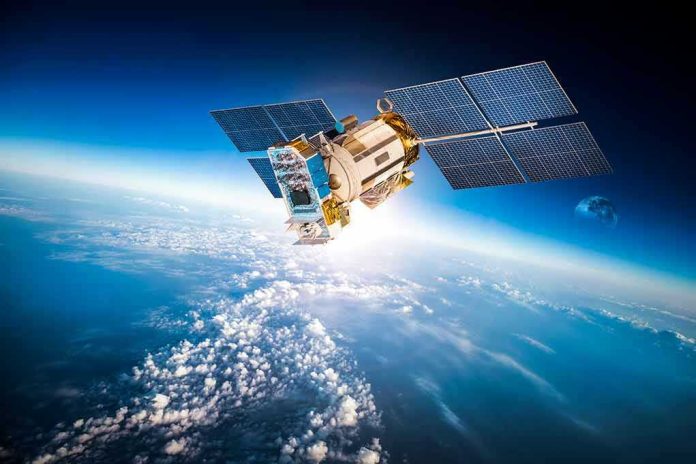
Researchers have leveraged global networks of seismometers, originally intended for earthquake detection, to track space debris reentering Earth’s atmosphere. This innovative method detects the sonic booms, or shock waves, produced by the debris, allowing real-time mapping of its trajectory, speed, and fragmentation. This approach addresses critical gaps in current radar and optical tracking systems, which often falter as debris enters the dense lower atmosphere.
Historically, space debris has been a growing concern, with defunct satellites and fragments posing collision risks. At least three large pieces reenter Earth’s atmosphere daily, yet their landing sites and atmospheric interactions remain poorly understood. The rapid increase in satellite launches, such as the Starlink constellation, has exacerbated this issue, highlighting the need for improved tracking methods.
Validation and Future Expansion
The seismic method was validated using the reentry of a Shenzhou spacecraft module on April 2, 2024. Data from 127 sensors in California and Nevada captured its sonic boom, revealing a path deviation from predictions. This technique reduces debris recovery time from days or weeks to mere minutes or hours, offering significant advantages over traditional methods.
As of January 2026, a peer-reviewed paper confirms the method’s effectiveness for U.S. networks, with plans to incorporate acoustic sensors globally. This advancement promises to enhance public safety by narrowing potential impact areas and aiding air traffic control.
Implications for Global Space Safety
In the short term, this method allows for faster recovery of debris and better hazard mitigation. Long-term implications include improved models of reentry dynamics and reduced environmental risks from potentially toxic fragments. The economic and political impact is notable, as the use of existing sensors offers a low-cost solution that aligns with public safety interests.
This seismic tracking method not only revolutionizes space situational awareness but also holds potential for meteor tracking. While some limitations exist, such as the lack of pre-impact warnings and U.S.-centric validation, the consensus among experts is overwhelmingly positive. The integration of acoustic sensors could further extend the method’s range and effectiveness.
Sources:
Earthquake sensors track space debris
ScienceDaily on seismic tracking
Phys.org on space debris tracking