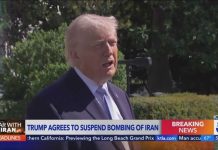
President Trump’s threat to send ICE into America’s airports exposed how a Washington funding standoff can quickly spill into everyday life—and how fast Democrats will cry “authoritarianism” instead of fixing the shutdown they’re leveraging.
Quick Take
- Trump said ICE agents would deploy to certain U.S. airports starting March 23 to help with TSA-related delays during a DHS funding shutdown.
- The partial shutdown began Feb. 14 amid a dispute over DHS funding and immigration policy demands, leaving many DHS workers unpaid.
- Tom Homan said the plan was still being finalized, with emphasis on large airports seeing the longest lines and delays.
- House Democratic Leader Hakeem Jeffries and other Democrats criticized the move as risky, while union and civil-liberties groups warned it could worsen chaos.
Trump’s ICE-at-airports threat ties immigration enforcement to shutdown pressure
President Donald Trump used a Truth Social post during day 36 of a partial government shutdown to warn that ICE agents would be moved to U.S. airports starting Monday, March 23. The stated rationale was to support overwhelmed TSA checkpoints and also arrest undocumented immigrants, framing the move as an answer to long lines and public frustration. Trump’s post included language about placing “heavy emphasis” on arrests involving people from Somalia.
Trump’s critics quickly amplified the most inflammatory reading of the announcement, but the core facts are narrower: the airport plan was linked to breakdowns caused by the shutdown and aimed at large hubs reporting multi-hour waits. What remains unclear—because officials said details were still being worked out—is exactly what tasks ICE would perform at terminals, where they would be stationed, and what rules would govern any immigration-related stops.
Shutdown-driven TSA staffing pain is the immediate driver of the travel chaos
The underlying trigger was not a new national security emergency; it was a funding crisis. The partial shutdown that began Feb. 14 left large parts of the Department of Homeland Security operating without pay, including TSA screeners. Reports cited severe checkpoint backups—more than three hours at times—at airports including Houston Hobby, Atlanta, and LaGuardia. The practical consequence is predictable: when workers go unpaid, absenteeism and resignations rise, and travelers become collateral damage.
This is the part Washington too often ignores: federal dysfunction turns ordinary Americans into hostages. Conservatives have long argued that government should be smaller and more disciplined partly because incompetence and political gamesmanship land hardest on families trying to work, travel, and live their lives. In this case, the shutdown turned airport security lines into a public pressure point—then both parties treated that pressure as leverage instead of a problem to solve.
Tom Homan says operational details were still “a work in progress”
Trump border advisor Tom Homan described the airport deployment planning as ongoing, saying a plan would be set by the end of March 22 and that priority would go to major airports with the worst delays. Homan’s comments suggested a tactical, targeted deployment rather than a blanket federal takeover of airports. Still, the lack of clear parameters—how many agents, what authority they would exercise, and how they would coordinate with TSA leadership—left space for political spin on both sides.
That uncertainty matters because airports are sensitive environments where missions blur quickly: screening for weapons is not the same job as enforcing immigration law, and the public deserves clarity on what will happen at checkpoints, gates, and terminal exits. From a limited-government perspective, the safest path is transparent rules and narrow objectives—especially when armed federal law enforcement is operating around families, children, and crowded public spaces.
Jeffries and Democrats criticize the plan as unsafe while unions warn it won’t fix pay
House Democratic Leader Hakeem Jeffries criticized the proposal on CNN, arguing ICE agents are not trained for TSA screening work and warning about the risk of harm or abuse. Other Democratic voices echoed that theme, framing the deployment as a politicization of law enforcement. The TSA union’s leadership also blasted the idea as a dangerous distraction that does not address the basic issue of paying TSA workers. Civil-liberties advocates likewise objected, calling the concept unprecedented.
Trump Triggers Hakeem Jeffries Meltdown by Naming America’s ‘Greatest Enemy,’ Sending ICE to Airportshttps://t.co/kkXRtkzlOM
— RedState (@RedState) March 22, 2026
Based on the available reporting, the headline claim of a Jeffries “meltdown” is overstated; his criticism reads as pointed but measured. The stronger, more verifiable political dispute is over strategy: Trump and allies argued Democrats were using airport pain as bargaining power, while Democrats argued Trump was using immigration enforcement to force a funding deal. Without publicly released deployment rules, both narratives remain partly interpretive.
Sources:
Trump border advisor says ICE to deploy to U.S. airports Monday
ICE agents to begin work Monday at some airports to try to help alleviate delays, lines