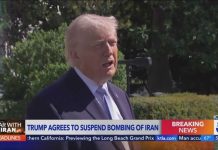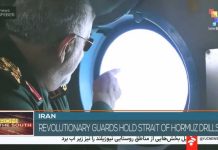
Iran’s attempt to choke off the Strait of Hormuz just met a hard reality: President Trump is moving to reopen the world’s most critical oil corridor—and Tehran is still showing it will exploit any weakness.
Story Snapshot
- President Trump announced plans for a U.S.-led effort to restore commercial shipping in the Strait of Hormuz after Iranian attacks disrupted tanker traffic.
- U.S. forces struck targets tied to Iranian asymmetric threats near Kharg Island, reportedly hitting more than 90 military-related sites while sparing oil infrastructure.
- Iran has continued to rely on mines, drones, and anti-ship missiles—low-cost tactics that can still threaten global trade even after major battlefield losses.
- Trump publicly urged other major powers—including U.S. allies and key oil importers—to contribute warships, but public commitments were not confirmed in reporting.
Trump’s Hormuz Move: Reopening a Chokepoint Iran Keeps Weaponizing
President Trump said on March 14, 2026, that the United States and partner nations would move warships toward the Strait of Hormuz to restore commercial passage after Iranian attacks effectively shut down tanker traffic. Reporting described Iranian tactics including drones, mines, and anti-ship missiles—tools designed to impose maximum economic pain at relatively low cost. The strait’s importance is not theoretical: it is a narrow, 21-mile chokepoint tied to roughly 20% of global oil trade.
Trump’s message also carried a burden-sharing demand that many American voters have wanted to hear for years: countries that depend on the passage should help secure it. Public reporting said Trump mentioned a wide mix of nations—from traditional partners like the U.K. and France to major importers like Japan and South Korea, and even China. The practical question remains whether those governments will join, but the strategic logic is straightforward: shared risk for shared benefit.
What Actually Closed Hormuz: Asymmetric Attacks, Not a “Conventional” Navy
Multiple reports described Iran targeting shipping in ways that are difficult and costly to counter—mines, drones, and missiles that can turn a busy waterway into an insurance nightmare. Maritime analysts have emphasized that restoring confidence requires more than telling commercial operators to “have guts”; it requires visible security and escorts. That matters because earlier warnings from U.S. maritime authorities drove risk perceptions higher, and when insurers and shipowners see elevated danger, commerce slows or stops.
That dynamic explains why a warship coalition matters even after U.S. strikes. Commercial shipping runs on predictable risk, not political messaging. If the strait is “open” only in speeches, tankers still sit on the sidelines, energy markets remain jumpy, and families back home feel the pain through higher prices. If escorts demonstrate safe passage, the pressure shifts back onto Iran by removing one of its most potent levers over the global economy.
Kharg Island Strikes Signal Deterrence—While Trying to Avoid an Oil-Price Self-Own
Reporting said U.S. forces conducted precision strikes on March 13 against Kharg Island targets, destroying more than 90 military-related sites tied to Iranian sea-denial capabilities while sparing oil infrastructure. That detail is important: Kharg is linked to Iran’s export system, and hitting oil facilities could trigger a spiraling energy shock. The strikes, as described, aimed to reduce the specific tools used to menace ships rather than torch the region’s energy plumbing.
Even so, the public record shows a tension: Trump has claimed Iran’s military capability was “decimated,” yet reporting also describes ongoing Iranian attacks that kept the strait effectively closed to tanker traffic. That is not necessarily a contradiction so much as a reminder of modern warfare. A nation can lose major assets and still deploy cheap, disruptive weapons. Mines and drones do not require air superiority or a blue-water fleet—only intent.
Iran’s Threats Toward Gulf Neighbors Highlight the Real Risk: Regional Blowback
Iranian statements reported by international outlets included vows of retaliation and warnings that Gulf states could be targeted, especially if they are viewed as enabling U.S. operations. Reporting also described the UAE on high alert and continued interception activity by regional partners. Meanwhile, Iranian officials were described as signaling the strait could be closed to “enemies” while potentially remaining open in selective circumstances—an approach that looks less like rules-based commerce and more like coercion.
President Trump Made a Courageous and Correct Call on Hormuz
and Iran's Actions Prove It https://t.co/3VeFpSXHv3— Marlow62 (@Marlow3456) March 16, 2026
For Americans watching from home, the constitutional issue is not abstract ideology—it is whether U.S. power is used with clear goals, limited scope, and accountability. The reporting so far indicates a defined objective: restore freedom of navigation and stop Iran from holding global trade hostage. What remains uncertain is how quickly a multinational escort operation can be assembled, whether partners commit real assets, and whether Iran escalates beyond harassment into broader regional strikes.
Sources:
Trump Claims Coalition to Send Warships to Reopen Strait of Hormuz
Strait of Hormuz: Trump, Iran, and the Push to Reopen a Critical Shipping Route
Trump urges UK, China, France and others to send ships to secure Strait of Hormuz