Falklands War-era British tanks that once served with distinction against Argentina are now operating in Venezuelan forces, raising questions about Western military hardware ending up in hostile hands decades after Britain’s victory.
Story Overview
- Venezuelan military maintains and operates ex-British FV101 Scorpion light tanks originally used in the 1982 Falklands War
- These combat-proven vehicles provided crucial fire support at Wireless Ridge and Mount Tumbledown during Britain’s campaign
- Venezuela acquired surplus Scorpions after Britain phased them out in the 1990s, conducting local upgrades to keep them operational
- The tanks represent a concerning pattern of Western military technology migrating to anti-American regimes through arms sales
British Falklands Veterans Now Serve Socialist Regime
The FV101 Scorpion light tanks currently operating in Venezuelan service earned their combat reputation during Britain’s 1982 Falklands War victory. Four Scorpions from B Squadron, Blues and Royals provided essential fire support for British paratroopers at the Battle of Wireless Ridge and Scots Guards at Mount Tumbledown. These were the only British Army tracked armored vehicles deployed in the conflict, proving their worth in the South Atlantic’s challenging terrain conditions.
The Scorpion’s low ground pressure, similar to a soldier on foot, enabled effective operations across the Falklands’ boggy landscape. Originally designed as part of Britain’s Combat Vehicle Reconnaissance family, these air-portable tanks entered British service in 1973 with The Blues and Royals of the Household Cavalry as the first fully equipped unit.
Venezuela Extends Life of Cold War Hardware
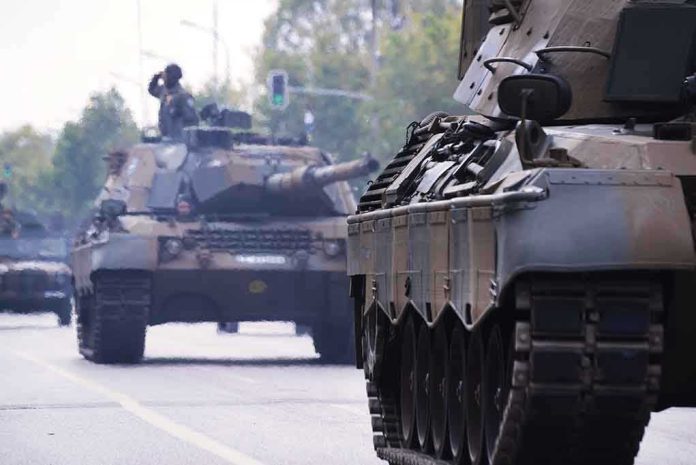
Venezuela acquired surplus British Scorpions after the United Kingdom withdrew them from active service in the mid-1990s. The socialist regime has since conducted local refurbishment programs, including engine upgrades and overhauls to maintain operational capability. Documentary evidence shows Venezuelan Scorpions in running condition, suggesting active use for training exercises and internal security operations despite their 1970s-era design origins.
The 76mm L23A1 main gun and 7.62mm coaxial machine gun configuration provides Venezuela with cost-effective armored fire support capabilities. However, the thin armor protection offers limited survivability against modern anti-tank weapons, relegating these vehicles to secondary roles rather than frontline combat operations in any serious conflict scenario.
Western Arms Sales Create Long-Term Security Concerns
The Venezuelan Scorpion story exemplifies broader problems with Western nations selling surplus military equipment without considering long-term strategic implications. Britain’s decision to monetize Cold War-era armored vehicles through export sales has resulted in combat-proven hardware serving in armies potentially hostile to Western interests and American influence in Latin America.
More than 3,000 Scorpions and variants were originally built for Britain and export customers, with Venezuela joining operators including Belgium, Chile, Indonesia, and Jordan. The continued operation of these Falklands veterans in Venezuelan service demonstrates how Western military technology continues circulating globally decades beyond original service life, often ending up in questionable hands through arms transfer policies prioritizing short-term financial gains over strategic security considerations.
Sources:
Scorpion Tank CVR(T) – Technical History and Development
The FV101 Scorpion Light Tank Has Fought From the Falklands to Iran
FV101 Scorpion Light Tank – Military Factory
Combat Vehicle Reconnaissance (Tracked) – Wikipedia
REME History: The Scorpion – REME Museum